
Meal planning
Smoothies and Soups for Weight Loss: Do Liquid-Meal Plans Work?
Explore what meal-replacement research does and does not show, and build satisfying smoothies and soups from ordinary foods.
Key takeaways
- Trials of structured meal replacements do not validate every smoothie or soup plan.
- Make liquid meals substantial with a protein source, produce and a suitable portion.
- Keep ordinary meals in the routine and check how long a meal actually keeps you full.
Liquid is a format, not a nutrition plan
A smoothie can be a snack, a drink alongside breakfast, or a substantial meal. The same is true of soup. Broth with a few vegetables is different from a thick lentil and vegetable soup served with bread. Before deciding whether either format helps with weight management, ask what is in the bowl or glass, what it replaces and how soon you want to eat again. Convenience matters, but so does getting enough food.
Someone who drinks a smoothie because they have little time in the morning might eat more regularly as a result. Someone who replaces a satisfying meal with a thin drink might become very hungry later. These are different outcomes from the same decision on paper. A workable pattern has to function across the whole day. It can include food you chew, food you sip, and ordinary meals shared with other people.
What meal-replacement trials actually studied
A systematic review by Astbury and colleagues compared structured interventions using partial meal replacements with other approaches in adults with overweight or obesity. Across included studies, programs with meal replacements tended to yield greater weight loss at one year than comparator programs. The size of the difference varied depending on the comparison and the level of support. This literature evaluates organized programs. It does not validate an individual online program or prove that any soup or smoothie will have the same effect.
Many trial products were standardized, so the portions and nutrient content were known. Participants might also receive structured advice, follow-up or behavioral support. A homemade drink based on fruit juice and a purchased meal-replacement product with measured amounts of protein and other nutrients answer different questions. To compare them, ask what the product supplies, what the rest of the day includes and what support surrounds the plan.
Keeping the results over time is another issue. A short plan may make shopping easier for a few weeks, but you still need something to do when the program ends. If you learn two recipes you genuinely enjoy and use them in a flexible rotation, that skill can remain useful. If the plan works only when you follow a rigid schedule, ordinary travel or family meals may make it difficult to continue.
Build a smoothie that can function as a meal
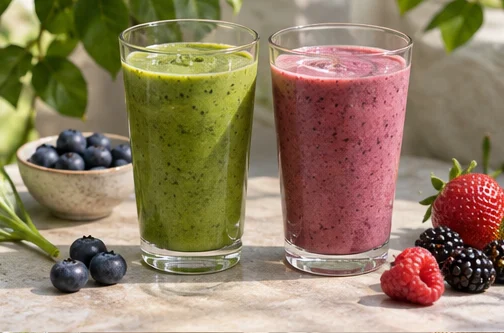
Choose a clear protein source. Options include Greek yogurt, a higher-protein fortified soy drink or silken tofu, according to your preferences. Add fruit for flavor, and consider oats or another food that contributes fiber. Use a liquid base you enjoy. Blending whole fruit keeps fiber that would otherwise be removed by straining or juicing, although the resulting drink may be easier to consume quickly. Add ingredients deliberately and check how the finished serving feels in your day.
For a practical first experiment, blend plain yogurt or silken tofu, berries, oats and enough milk or soy drink to get the texture you like. If you prefer to have something to chew, serve part of the fruit or a piece of toast on the side. If you are hungry soon afterward, add a substantial side or use the same ingredients as a bowl with a spoon. That comparison can tell you whether you need more food, a slower meal, or a different format.
A smoothie can become very energy-dense when the serving is large and several extras go in by habit. Nuts, nut butter and seeds can contribute nutrients and flavor, but the amounts still matter. Start with an amount you can describe and change it if hunger or activity calls for it. Avoid assuming a drink is a small snack simply because it fits in a cup, or a full meal simply because the cup is large.
Make soup substantial enough for the job
Begin with vegetables and add beans, lentils, chicken, tofu or another protein you enjoy. Include potatoes, barley, rice or bread if the meal calls for it. Season with herbs, spices, lemon or a sauce you like. A soup designed as a starter can still be a good starter. When you expect it to carry you through a full afternoon, build it more like a complete meal.
For a batch example, simmer onions, carrots and a can of tomatoes with lentils and stock. Stir in frozen greens toward the end and serve with bread or a grain. You can puree a portion to change the texture while leaving some ingredients whole. Freeze single servings you will not use soon. On the next busy day, add a side or a different topping so the same base works with a different appetite.
Check packaged soups by the serving size you will actually eat. Sodium can vary substantially, so compare the labels if your clinician has recommended a limit. Look at protein, fiber and the rest of your meal as well. A soup that is lower in one nutrient can work when paired with a suitable side. It is easier to make a good lunch when you are assessing the meal rather than judging each item in isolation.
Try a one-meal comparison
Choose one meal to test on ordinary days. In the first week, have a familiar solid meal on two days and a substantial smoothie or soup on two days. Keep the rest of the schedule as similar as is reasonable. Notice how long it takes to prepare, whether you enjoy it, how hungry you are later, and whether you feel able to join your next meal as usual. A meal should leave you able to go about your day.
In the second week, change one component if the results are mixed. Add a protein source, use whole fruit, make the soup thicker, or add something to chew. Do not assume a disappointing result means you need a more restrictive plan. You may simply prefer a sandwich with soup or yogurt and fruit in a bowl. If it works well, save the recipe and make it again when it is useful.
If you are considering a program that asks you to replace more than one meal a day, look closely at the nutritional adequacy and the path back to regular meals. People with medical conditions, medication affected by food intake, or an eating disorder history should ask for individual guidance. During pregnancy or breastfeeding, discuss dietary changes with a clinician. A recipe guide cannot make those assessments for you.
What to do with detox claims
NCCIH finds little convincing evidence that detox or cleanse diets remove toxins or produce durable weight loss. A lower-energy diet can change weight, and a change in food or fluid can affect a scale reading quickly. Those observations do not validate a cleanse. Your health decisions are better served by knowing exactly what you will eat, why you are trying it and whether it provides what you need.
If a plan sells a separate supplement, read that label as its own purchase. A soup recipe does not establish a reason to use a concentrated extract or laxative. You can get the practical benefit of batch cooking without agreeing with the entire marketing story. Ask yourself whether the recipe alone solves the problem you came with. If it does, start there.
Plan for life after the recipe
Choose a place for the recipe in your regular week. You might make soup on Sunday and freeze half, or keep a smoothie for mornings when you leave early. Build a solid-food alternative for the same occasion. A yogurt and oat bowl takes many of the same ingredients as a smoothie. A bean sandwich and vegetables can cover some of the same ground as soup. Knowing both options makes the habit more resilient.
When you compare paid programs, look for clear recipes, ordinary ingredients and flexibility for allergies, budget and taste. Check which meals are replaced and whether the written materials explain what comes after the scheduled period. A guide may be useful as a cookbook or a way to organize shopping. The product's title or guarantee does not determine whether you will want to keep eating that way.
Two ways to use the same groceries
Suppose you have cooked lentils, roasted carrots, a lemon and yogurt in the fridge. For soup, warm the lentils and carrots in stock, blend half, and finish with lemon and a spoon of yogurt. For a solid lunch, keep the lentils and carrots whole, add cooked grain or a slice of bread, and make a dressing with the yogurt and lemon. Add herbs to either version. The shopping is the same, while the texture, time at the table and experience of eating are different.
For the smoothie version of the experiment, compare a drink with a bowl made from the same yogurt, berries and oats. Give yourself time to finish each meal without rushing, then see how you feel in the hours that follow. If the bowl fits you better, keep it. If the smoothie helps you eat on a rushed morning and feels satisfying, keep that too. This is a practical food choice you can make without adopting a full liquid-meal plan.
If you plan to carry a soup or smoothie away from home, think about storage and transport as part of the experiment. Use an insulated container or refrigeration as appropriate and make sure the portion can be carried safely. A meal that works at home may need a different format on a commute. A backup you enjoy keeps convenience from becoming another restriction.
Considering a paid recipe plan?
The Smoothie Diet and Flat Belly Soup Diet offer recipes and meal structure. Compare what each plan asks you to replace, how you would meet your food needs and whether the schedule fits your life.
For general information only. Consult a qualified healthcare professional before starting a diet or supplement, especially if you are pregnant, nursing, taking medication, or managing a medical condition.