
Nutrition basics
High-Fiber, High-Volume Eating to Stay Full
Build satisfying meals with beans, whole grains, fruit and vegetables, and increase fiber at a tolerable pace.
Key takeaways
- Build meals around foods with water and fiber, plus a protein source and enough energy.
- Increase fiber gradually and give yourself time to adjust.
- A higher-volume meal is only useful if it keeps you comfortably satisfied.
Fullness comes from the whole meal
High-volume eating usually means using foods that bring a generous amount of food and water for the energy they provide. Vegetables, fruit and broth-based dishes can do that. Fiber is related, but the two ideas are different. Beans and whole grains can provide substantial fiber without looking like a giant serving, while a large bowl of broth may have little fiber or protein. Build around both ideas if they help you enjoy and finish a meal feeling comfortable.
The useful comparison is with what you normally eat. If a plain salad leaves you searching for food an hour later, add beans, tofu, fish or eggs, a grain or bread, and a dressing you enjoy. If you prefer a smaller lunch, include a fruit or yogurt snack later. Fullness is a practical outcome. It does not require an enormous plate or a meal designed mainly to look big.
Understand the fiber target in context
Harvard T.H. Chan's Nutrition Source explains that fiber is a type of carbohydrate the body cannot fully break down. Fibers have different properties. Some dissolve and thicken in water. Others help add bulk. Some are fermented by gut microbes, which can be part of why a sudden increase produces gas. Whole foods generally contain mixtures rather than one isolated type.
Public-health guidance gives ranges or targets that vary with age, sex and energy needs. NIDDK's constipation guidance emphasizes dietary fiber and fluids, with an amount appropriate to the individual. A target can help you see the general direction. You do not need to calculate it precisely before changing breakfast. For a first step, look for the foods in your usual week that already provide fiber and add one reliable serving where it is missing.
A high-fiber label is only one piece of information. Compare the amount per serving with how much you actually eat, and check the other ingredients. A packaged snack fortified with a fermentable fiber can affect you differently from a bowl of oats or some beans. If one product causes symptoms, it may help to change the source or dose rather than giving up on fiber as a category.
A meal template you can repeat
Start with vegetables or fruit that you like. Use fresh produce when it is easy to buy and frozen or canned where that makes the week more manageable. Add a protein source and enough carbohydrate for your needs. Flavor the meal with a dressing, herbs, spices or a sauce you enjoy. A flexible bowl could be cooked barley, roasted vegetables, chickpeas and a spoon of yogurt dressing. Change the grain or protein to make it fit your kitchen.
For breakfast, add berries or grated apple to oats and include yogurt or a suitable soy alternative if you want more protein. At lunch, make vegetable soup substantial with lentils and serve it with whole-grain toast. At dinner, mix beans into a tomato-based sauce and serve with pasta and a side of vegetables. These are ways to add fiber to familiar foods. You can adjust texture by cooking vegetables more thoroughly, leaving fruit whole or pureeing part of a soup.
If you eat away from home, look for a meal that has an obvious main component and a vegetable, fruit or bean side. A burrito bowl with beans, rice and vegetables can work. So can a sandwich with a side of fruit or a lentil soup with bread. One addition can matter even if the rest of the plate is similar to your usual order.
Increase gradually and check tolerance
Start with one change for several days. Add oats at breakfast, switch one grain choice, or put a small amount of lentils into a soup you know you tolerate. Pay attention to comfort and bowel habits. If you feel fine, add another change later. If you notice bloating or discomfort, return to the previous amount and try a slower progression or a different food. It is easier to learn from one new variable at a time.
Drink fluids as appropriate for your health and activity. A clinician's fluid guidance takes priority if you have a condition that limits intake. For some people, increasing fiber with very little fluid can make constipation harder to manage. Talk with a clinician or dietitian if you have a bowel condition, persistent symptoms, or have been told to limit fiber temporarily. New or persistent symptoms deserve attention, especially if accompanied by other concerning changes.
Beans can be easier to introduce in small portions. Rinsing canned beans also lets you season them to your preference. Add a little to a dish before making beans the centerpiece. If large raw salads feel uncomfortable, try cooked carrots, zucchini or green beans. Cooked vegetables still have value. The best choice for your day includes both the food's nutrition and whether you can eat it comfortably.
Plan around the time you get hungry
Think about which meal most often leaves you hungry later. If it is breakfast, try oats with fruit and a clear protein source before changing the other meals. If it is lunch, see whether the usual meal has enough food overall. A broth and a handful of greens may be easy to eat but too small to carry you through a long afternoon. Add bread, beans or another substantial component before judging whether more vegetables helped.
When hunger arrives, notice what it tells you. It may be a normal sign that several hours have passed. A planned snack such as fruit with yogurt, whole-grain toast with hummus, or leftovers can be a good response. If the afternoon snack repeatedly replaces dinner because you are too busy to cook, plan for a reheatable meal. Changing the schedule may be easier than trying to stretch the lunch portion indefinitely.
Try a grocery basket with two overlapping meals
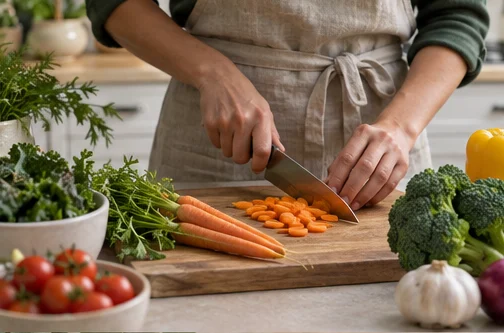
Choose two vegetables, one fruit, one grain and one protein you like. For example, carrots and frozen spinach can go into lentil soup, while cooked lentils and carrots can become a grain bowl with lemon and herbs. Keep oats and apples for breakfast or snacks. If you also buy yogurt or soy yogurt, use it in the bowl dressing and alongside fruit. A short list gives each ingredient several jobs and helps prevent waste.
Prepare just the parts that slow you down. Chop carrots for the soup while cooking the grain, or buy frozen vegetables and focus on making a dressing. Store cooked food safely and freeze portions you will not use soon. Keep some meals ready to assemble rather than planning to eat the same finished dish all week. Changes in seasoning, texture and temperature can make overlapping ingredients feel different.
What to do when the result is mixed
A higher-fiber meal can make you more comfortable on one day and less comfortable on another. The portion, how quickly you ate, what else you consumed and the rest of the day all matter. Look for a repeated pattern before drawing a conclusion. If beans make you uncomfortable at lunch, try a smaller portion at a more relaxed meal or choose a different source.
If weight management is the goal, think of fullness as a way to support a workable routine. A bigger serving of vegetables may help when it takes the place of something you do not especially enjoy or keeps you satisfied through the afternoon. If it simply makes a meal too bulky or displaces food you need, it has missed the point. The right plate can be smaller and still be satisfying.
Keep a low-effort option available
Have a fallback for days you cannot chop or cook. Canned lentil soup with added frozen spinach, a whole-grain wrap with hummus and grated carrots, or yogurt with oats and fruit can be ready quickly. Write down two options and keep their ingredients somewhere easy to see. If a meal only works with a long shopping list or a special appliance, it may be better as a weekend option.
After a week, choose the option you looked forward to eating again. Repeat it as often as it suits you and use a different produce or grain when you want variety. A modest rotation that matches your budget and digestion is easier to maintain than a search for the highest fiber count in every meal. Let the results you notice, including comfort, satisfaction and how much food you waste, guide the next change.
If you share meals with someone who prefers different textures, keep the fiber-rich additions separate until serving. One person can have beans in the soup and another can eat a smaller portion as a side. A bowl can use roasted vegetables instead of a raw salad, or a mixture of the two. This is a useful way to try a change without committing the whole meal to a single unfamiliar ingredient.
Before shopping again, ask whether the current plan made lunch easier, whether your digestion was comfortable and which foods went unused. Use those three observations to adjust the next basket. A plan with fewer ingredients can work better if you eat what you buy.
When trying a new whole grain, cook a small batch before stocking a large bag. You can mix it with a familiar grain, serve it in a soup, or pair it with a sauce you already enjoy. Compare texture and cooking time along with the fiber content. Those details matter when deciding whether it deserves a regular place in your kitchen.
Mediterranean-style meal planning
A Mediterranean-style rotation can make it easier to use beans, vegetables and whole grains across several meals. If you want a paid planning tool, the Mediterranean Diet Plan starts with a quiz. The research linked below studied a broader lifestyle program. It did not test this vendor’s quiz or menu.
For general information only. Consult a qualified healthcare professional before starting a diet or supplement, especially if you are pregnant, nursing, taking medication, or managing a medical condition.